
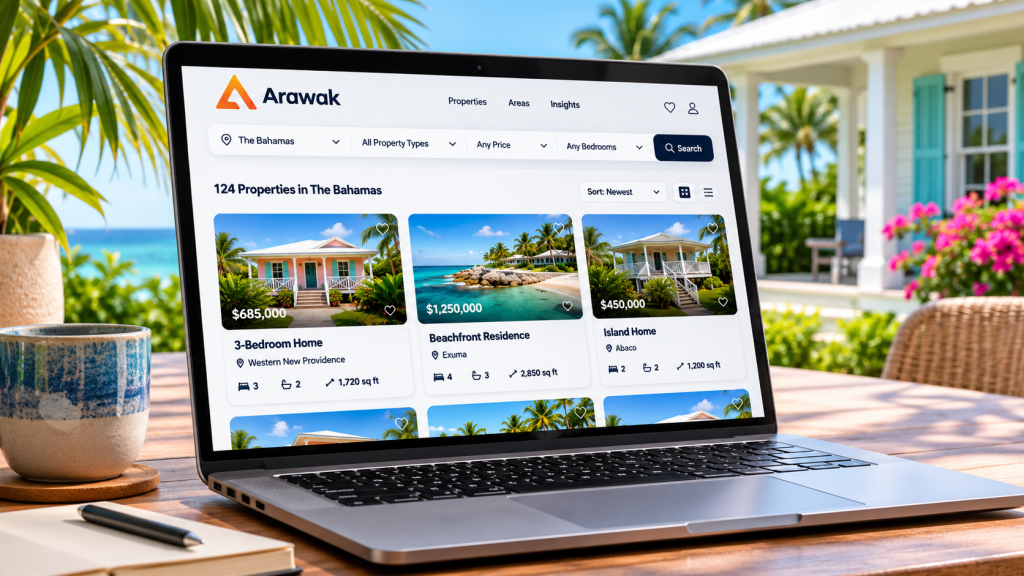
Before investing more in advertising, real estate professionals should ask a simpler question: Are prospective buyers actually able to find what they’re looking for?
Imagine walking into a retail store and being told you need to speak with a salesperson before you can find out what’s available.
No shelves to browse. No product catalog. No way to compare prices or specifications. Just an invitation to leave your contact information and wait for someone to get back to you.
It sounds like an unusual way to run a business.
Yet in real estate, a surprisingly similar approach remains common.
Prospective buyers encounter advertisements, social media posts, and brokerage websites promising access to exceptional properties, only to discover that the actual inventory is difficult to search, poorly organized, or missing important information.
Sometimes, the only practical option is to contact an agent and ask what’s available.
But why should a prospective customer have to initiate a business relationship before they can determine whether you have what they’re looking for?
That’s a question more real estate professionals should be asking.
Your Inventory Is More Than Something to Advertise
Real estate marketing has become increasingly focused on visibility.
Agents invest in social media content, sponsored advertisements, professional photography, video tours, and personal branding. Brokerages promote their teams, their expertise, and their track records.
These activities have value. Reputation and relationships remain important in real estate, particularly in relatively small and interconnected markets like The Bahamas.
But there’s a fundamental distinction between attracting someone’s attention and giving them a reason to become a customer.
The properties themselves are often the strongest reason a prospective buyer has to engage with an agency.
Someone looking for a waterfront lot in Exuma, a family home in western New Providence, or an investment property in Grand Bahama already has a particular interest.
They aren’t necessarily searching for an agent.
They’re searching for property.
The agent becomes relevant when they can help that person discover, evaluate, and ultimately acquire something that meets their needs.
That makes accessible, informative, and searchable property inventory a powerful lead generation tool in its own right.
The Problem With Advertising Something People Can’t Easily Find
Consider a typical social media campaign.
An agency publishes an attractive property photograph with a short description and a call to action. The post reaches thousands of people, generates engagement, and perhaps attracts several inquiries.
That’s useful exposure.
But what happens to everyone who is interested in the general type of property being advertised, just not that specific listing?
What if the property is outside their budget? What if they prefer a different neighborhood? What if they’re looking for something similar but with an additional bedroom or a larger lot?
Unless the agency provides a straightforward way to explore comparable inventory, much of that potential interest goes nowhere.
The advertisement may have succeeded in attracting attention, but the opportunity to turn that attention into meaningful property discovery was lost.
Now imagine that same advertisement directs visitors to a searchable catalog where they can explore additional listings, adjust their requirements, compare properties, and identify alternatives.
The original advertisement is no longer a single opportunity to generate an inquiry.
It becomes an entry point into a larger inventory of opportunities.
This is where the relationship between marketing and property discovery becomes particularly important.
Advertising should bring people to your inventory. Your inventory should give them a reason to stay, explore, and eventually make contact.
Stop Treating Every Inquiry as the Beginning of Property Discovery
For many prospective buyers, contacting an agent is an important step—but it shouldn’t necessarily be the first one.
Today’s consumers are accustomed to researching products and services independently before engaging with a business.
They compare options, examine specifications, evaluate prices, and narrow their preferences.
Real estate is no exception.
A prospective buyer might want to understand how far their budget will go in a particular neighborhood. They may want to compare properties across several islands, examine available land, or simply get a sense of what the market offers before committing to a conversation.
These aren’t necessarily unqualified prospects.
They’re people doing research.
And that research can eventually lead to a transaction.
A well-structured property search experience allows potential customers to complete much of this early exploration independently.
By the time someone contacts an agent about a particular listing, they may already know the location, asking price, property characteristics, and why it interests them.
That doesn’t eliminate the need for agents. It can make the agent’s role more valuable.
Instead of beginning every conversation with basic questions about available inventory, agents can spend more time helping customers evaluate their options, understand market conditions, arrange viewings, and navigate transactions.
Better discovery doesn’t replace professional relationships. It helps those relationships begin with more informed customers.
Your Website Should Be Working Even When You’re Not
One of the most valuable characteristics of a digital property catalog is that it can remain accessible beyond business hours, geographic boundaries, and individual marketing campaigns.
A prospective buyer researching Bahamian property from Toronto, London, or Miami shouldn’t need to know which local agent to contact before beginning their search.
Likewise, someone in Nassau considering an investment in Abaco shouldn’t be limited to whatever properties happen to appear in their social media feed.
They should be able to explore relevant inventory on their own terms.
For brokerages, this creates an opportunity that extends beyond paid advertising.
An accessible property catalog can support organic search visibility, direct referrals, returning visitors, and ongoing engagement with prospective customers.
Individual listings and useful search pages can become additional entry points into the agency’s digital presence, provided they’re properly structured, maintained, and accessible to search engines.
Unlike an advertisement that stops generating exposure when its budget runs out, a well-maintained digital presence can continue attracting interest over time.
Of course, publishing listings doesn’t automatically guarantee search rankings or a steady stream of inquiries. Visibility still requires sound technical implementation, relevant content, competitive inventory, and a deliberate distribution strategy.
But the underlying opportunity is clear.
A brokerage website shouldn’t function solely as a digital business card.
It should be an active part of the agency’s sales and customer acquisition infrastructure.
Facebook Marketplace Has Already Demonstrated Something Important
There’s a reason property advertisements have become a familiar part of platforms like Facebook Marketplace.
For buyers, the appeal is straightforward: they can browse available inventory without first establishing a relationship with an agent.
They see properties, compare asking prices, examine photographs, and contact advertisers when something catches their interest.
In that respect, Marketplace reinforces a basic principle of customer behavior.
People want to see what’s available.
But Marketplace also illustrates the limitations of property discovery without consistent, structured information.
Listings can vary considerably in completeness and accuracy. Geographic descriptions may be too broad to establish precisely where a property is situated. Search and filtering capabilities aren’t always sufficient for detailed property research, and important information may be buried in descriptions or omitted altogether.
Knowing that a property is located in Abaco, for example, tells a buyer very little about whether it’s in a neighborhood they actually want to live in, how accessible it is, or what surrounds it.
These details matter enormously when evaluating real estate.
Marketplace can be an effective channel for generating initial interest, but it isn’t necessarily a substitute for a dedicated property discovery experience.
And that distinction points to an opportunity for professional brokerages.
If consumers are willing to browse property advertisements on general-purpose platforms, imagine the value of offering them a more comprehensive, accurate, and purpose-built experience directly through the agency’s own digital presence.
The Competitive Advantage Isn’t Always a Bigger Advertising Budget
It’s easy to assume that generating more leads requires spending more money on advertising.
Sometimes it does.
But before increasing marketing expenditure, brokerages should examine what happens after someone discovers their business.
Can visitors easily browse the agency’s available properties?
Can they search by relevant criteria?
Can they understand where a property is located?
Can they compare alternatives without repeatedly contacting an agent?
Does the website make it easy to move from casual interest to a meaningful inquiry?
If the answers are consistently no, increasing advertising expenditure may simply send more people into an experience that isn’t designed to retain their interest.
This is why the quality of a brokerage’s property inventory presentation deserves as much attention as its social media campaigns.
An effective discovery experience won’t eliminate the importance of advertising, personal relationships, referrals, or professional expertise.
It strengthens the value of those activities.
And importantly, better lead generation isn’t necessarily about collecting more contact information.
It’s about attracting people with genuine property interests and giving them sufficient information to decide when they’re ready to engage.
Rethinking Property Discovery in The Bahamas
The Bahamian real estate market presents an interesting opportunity for this approach.
With properties distributed across multiple islands, settlements, neighborhoods, and development areas, prospective buyers often need to evaluate unfamiliar locations and compare opportunities across considerable geographic distances.
Accessible, consistent property information becomes particularly important in that environment.
Yet individual agency websites, disconnected listing catalogs, and inconsistent approaches to displaying property information can make the discovery process more difficult than it needs to be.
Improving that experience doesn’t require every brokerage to abandon its brand or surrender its customer relationships to a third-party marketplace.
It requires thinking differently about how property information is organized, made accessible, and presented to prospective customers.
At Arawak, we’re exploring how better property data, search technology, and connected digital storefronts can help real estate professionals make inventory more discoverable while maintaining their own professional identity and customer relationships.
The underlying principle is simple: make it easier for people to discover relevant properties, and you create more opportunities for meaningful engagement between buyers and the professionals who represent them.
Before Your Next Campaign, Ask One Question
The next time you’re preparing a property advertisement, social media campaign, or promotional video, consider what happens when someone becomes interested.
Where do they go next?
Can they explore what else you have available?
Can they find enough information to make an informed decision about contacting you?
Or does the discovery process effectively end with the advertisement?
Real estate marketing shouldn’t begin and end with capturing attention.
It should connect that attention to something people are actively looking for.
Because ultimately, your listings aren’t just the properties you’re trying to sell. They’re one of the most compelling reasons prospective customers have to discover your business in the first place.
And making them easier to find may be one of the most valuable marketing investments you can make.
Explore a different approach to property discovery at Arawak.